• Are your documents too hard to read?
• Can your readers understand your words?
• Do you know the reading-level and grade-level of your materials?
Welcome to ReadabilityFormulas.com, a free website to help you: 1) score your texts (documents, books, policies, technical materials, etc.) and 2) find the reading level and grade level that readers need to read and comprehend your text.
Use Our New Readability Scoring System
In today's fast-paced world, clear communication is key. Whether you're a professional writer, an educator, or simply someone who wants to make your content more accessible, understanding the type of readers who can read your text can lead to better engagement and comprehension.
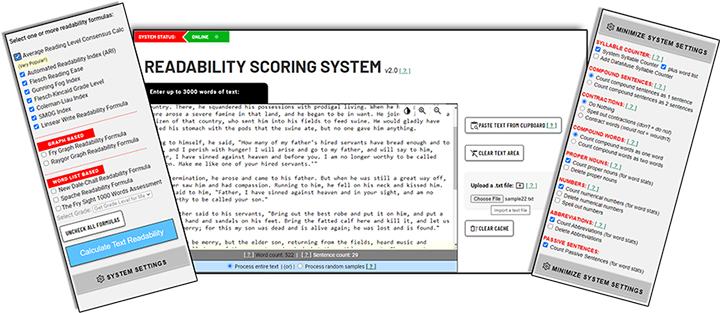
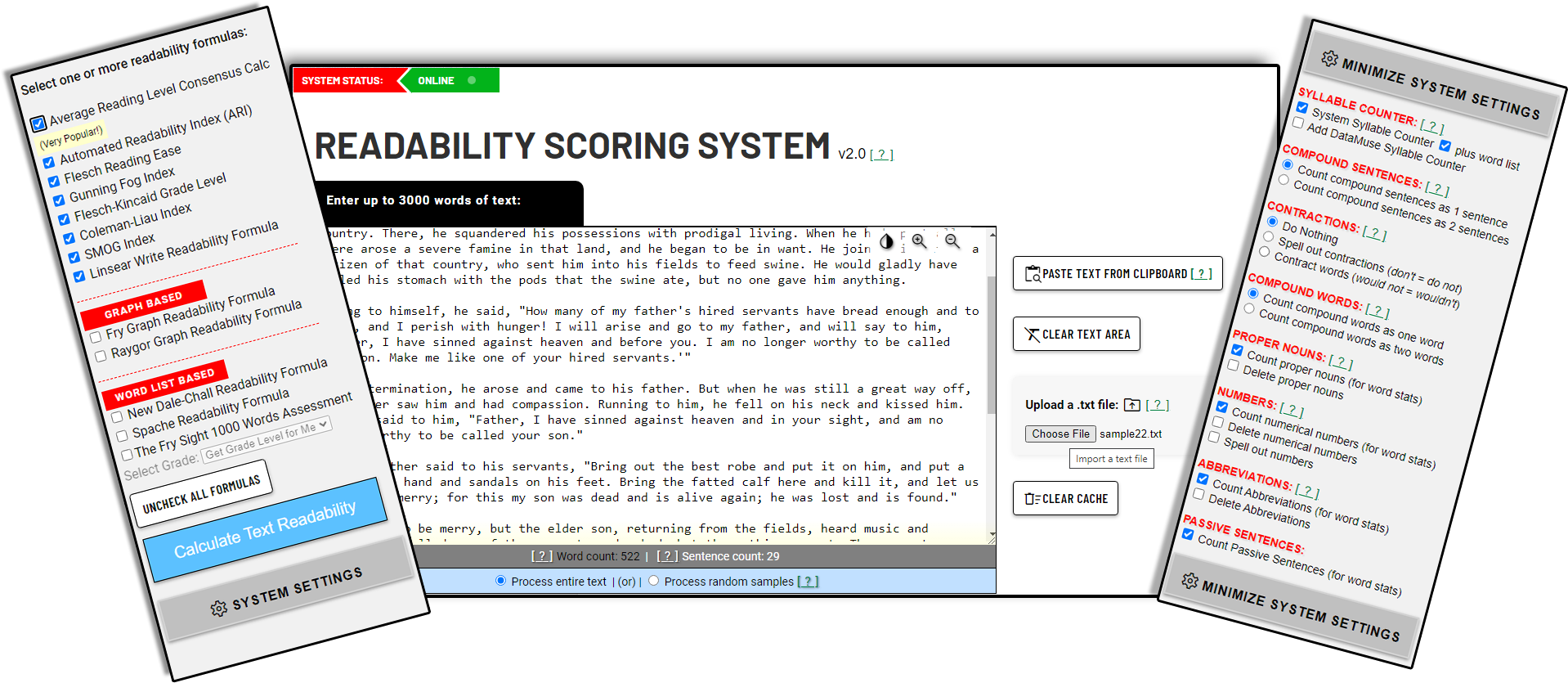
Our new Readability Scoring System is a state-of-the-art tool that evaluates the complexity of a text and assigns it a score based on internationally recognized scales such as Flesch-Kincaid, Gunning Fog, and SMOG. It provides insights into the reading age, word usage, sentence length, and overall comprehension level required to understand the content. Assess the readability of texts across different scales, including individual sentences, paragraphs, or complete documents. Our platform is designed for users of all technical levels.
Improved Word-List Readability Formulas
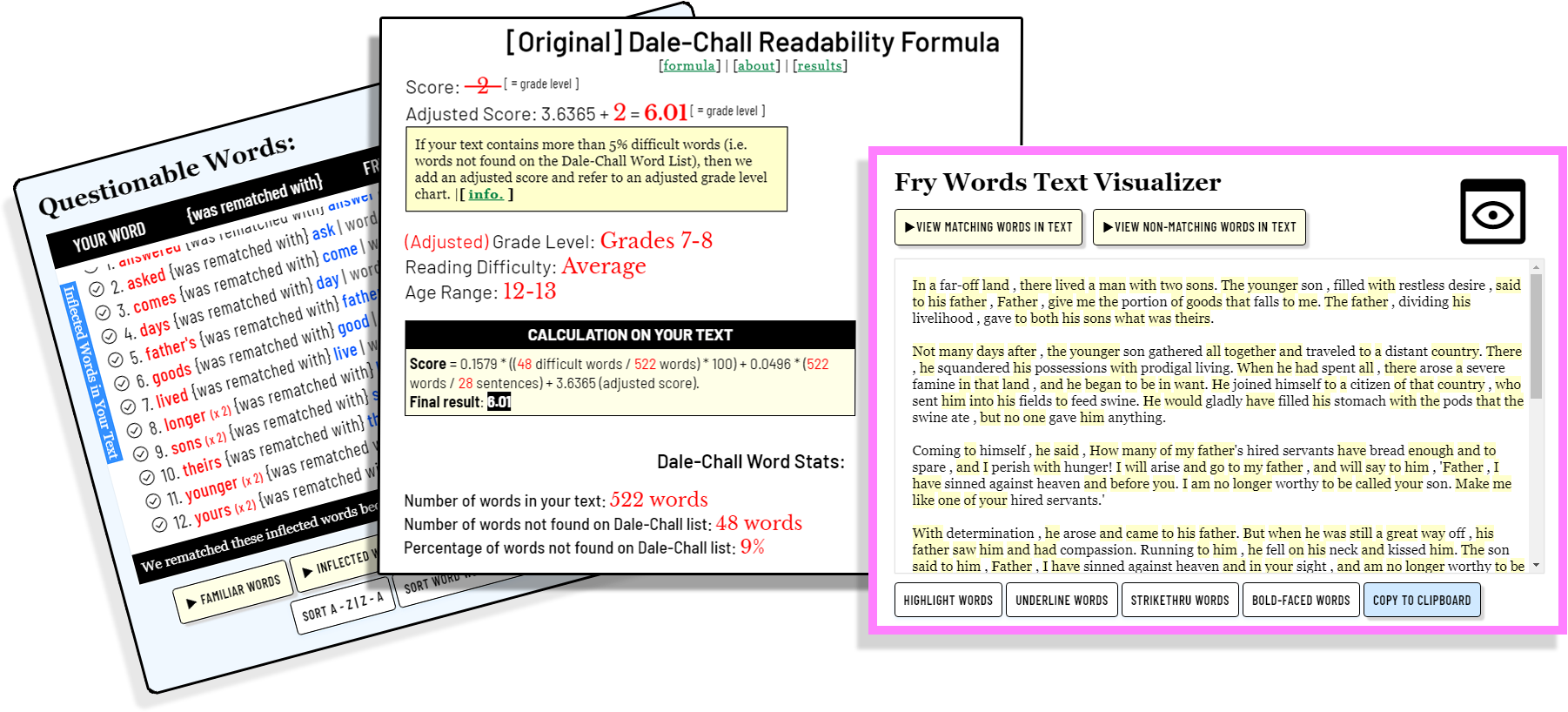
We've improved both the Dale-Chall and Spache word-list formulas to include their original and updated calulations. We've also added the Fry Sight 1000K Words Assessment, a unique tool that helps you determine which words readers will find familiar or difficult and at what grade-level. Each word-based formula also helps you analyze questionable words, familiar words, and difficult words based on their specific word-lists.
Free Readability Tests Using Graphs
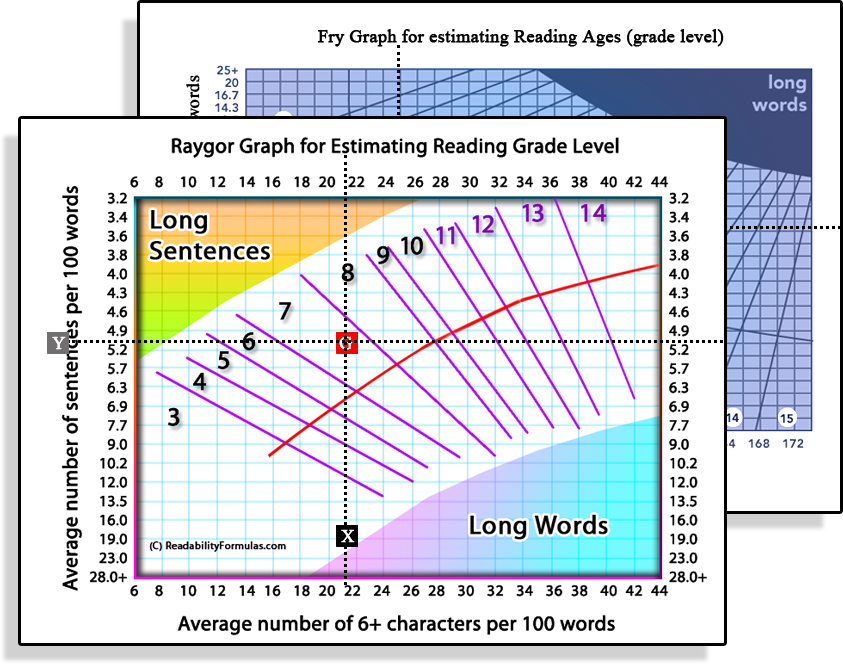
In addition to the readability text tools above, we have a separate readability calculator called, the Fry Graph and Raygor Graph Text Tool, which will score a sample of your text and visually plot the grade level onto each graph.
The Fry readability formula measures English texts to provide you with a reading/grade level based on two criteria: 1) the average number of sentences, and 2) syllables per hundred words. We plot these averages onto The Fry Graph to visually show you the grade level of your readers.
Similar to The Fry Graph, The Raygor readability formula also measures text based on the average number of sentences and letters per hundred words. We plot these two averages on the Raygor Graph to visually show you the reading/grade level of your readers. The Raygor Graph is largely used in secondary education to assess teaching materials and books, whereas The Fry Graph is commonly used on a broader range of texts.
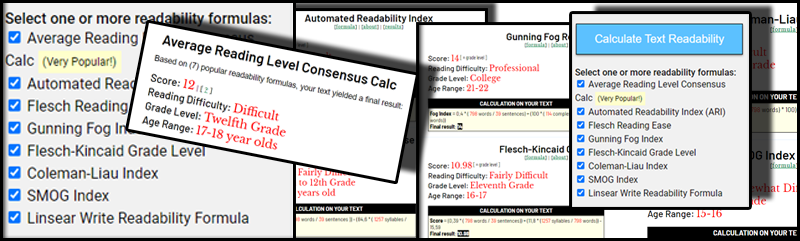
The Averge Readability Consensus Calc processes your text through seven popular readability formulas and lets you know who can read your text. Score your text now.
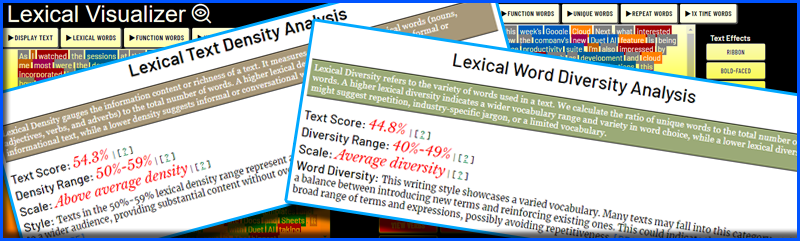
Use our free Writing Style Analysis tool to analyze your text using Lexical Density and Lexical Diversity. Both measures provide insights into a writer's writing style and characteristics. They help analyze the richness, complexity, and vocabulary variety.
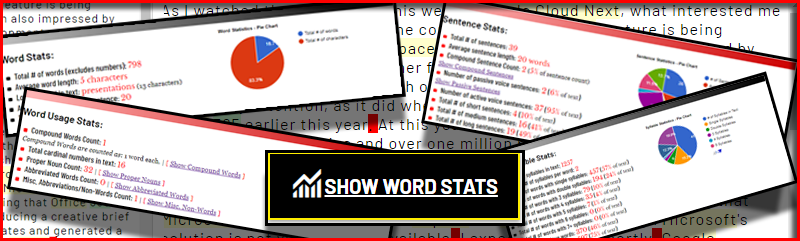
We've improved our WORD STATS to include more in-depth statistics about your text, including a dissection of word usage, sentence structure, syllable count, and so on.
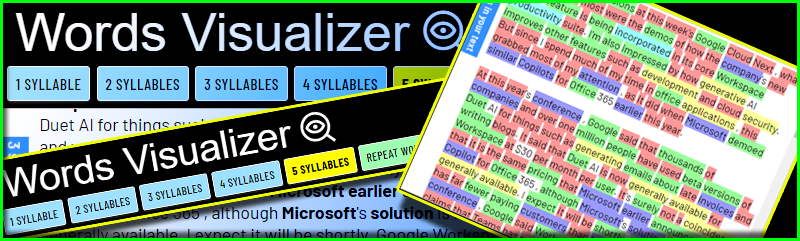
Long syllable counts are often culprits of creating reading difficulty. With our new WORDS VISUALIZER feature, you can easily see the most difficult words in your text.
Learn How to Write Better
Many writers, professionals and amateurs, face the dilemma of writing materials above the reading level of their readers. The best way to write for your target audience is to learn how to make your writing more readable by removing unnecessary words, using more familiar words, and sticking to a shorter sentence length. We invite you to peruse through our many articles on how to write better using readability formulas. Our authors offer you their best writing tips to help you identify and remedy problem areas in your writing and write in plain English—the preferred writing style for a public readership. See all articles about readability and writing.
Who Can Benefit from Readability Formulas?
Writers & Editors: Enhance the quality and accessibility of your writing.
Educators: Tailor educational material to match the reading level of your students.
Marketing Professionals: Craft messages that resonate with your target market.
Healthcare Providers: Ensure patient materials are easy to understand.
Government Agencies: Communicate clearly with constituents.

 In addition to the readability text tools above, we have a separate readability calculator called, the Fry Graph and Raygor Graph Text Tool, which will score a sample of your text and visually plot the grade level onto each graph.
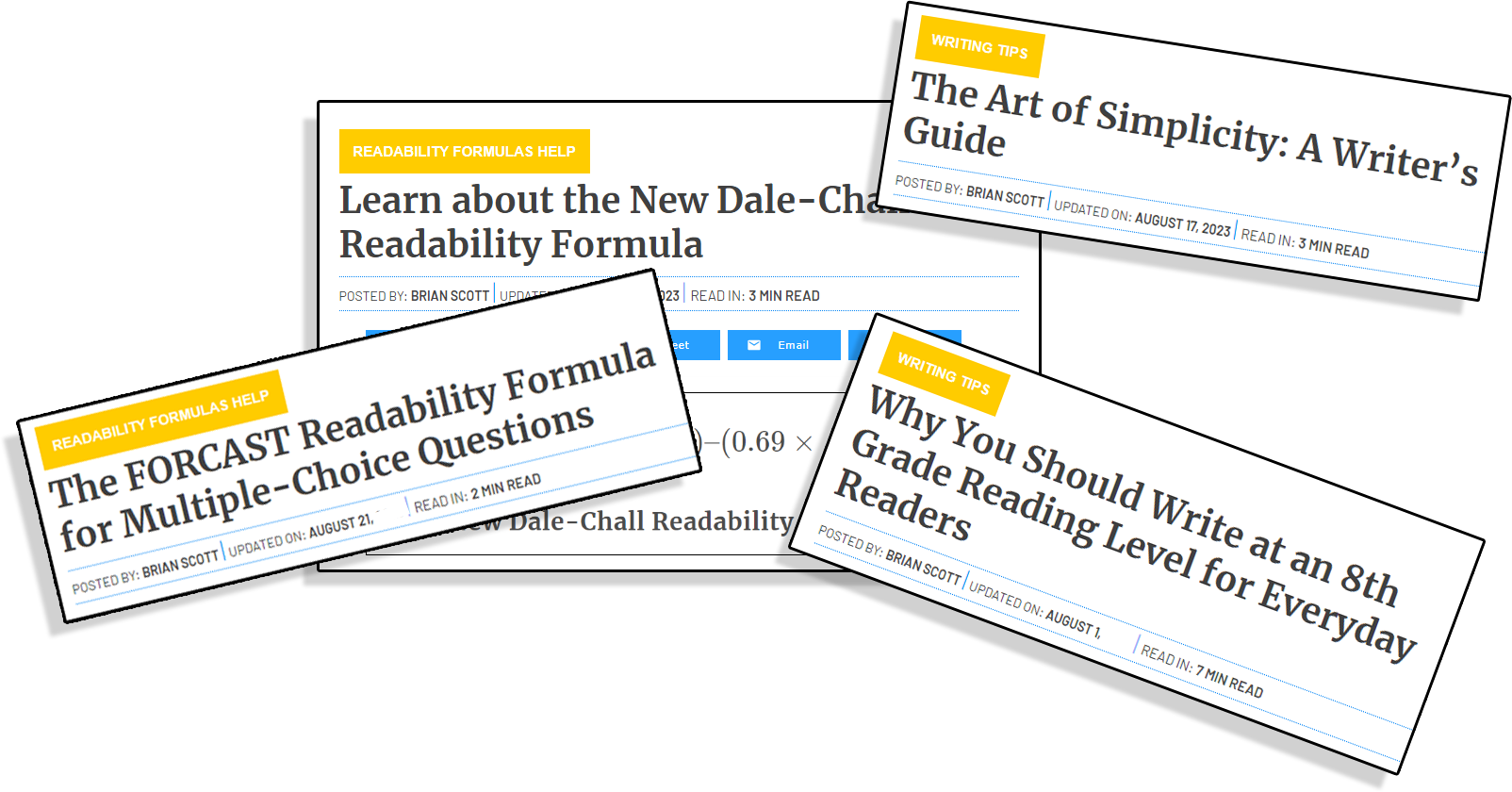 Many writers, professionals and amateurs, face the dilemma of writing materials above the reading level of their readers. The best way to write for your target audience is to learn how to make your writing more readable by removing unnecessary words, using more familiar words, and sticking to a shorter sentence length. We invite you to peruse through our many articles on how to write better using readability formulas. Our authors offer you their best writing tips to help you identify and remedy problem areas in your writing and write in plain English—the preferred writing style for a public readership. See all articles about readability and writing.